CRITICAL
The same model, held at one temperature. The point where it changes its mind.
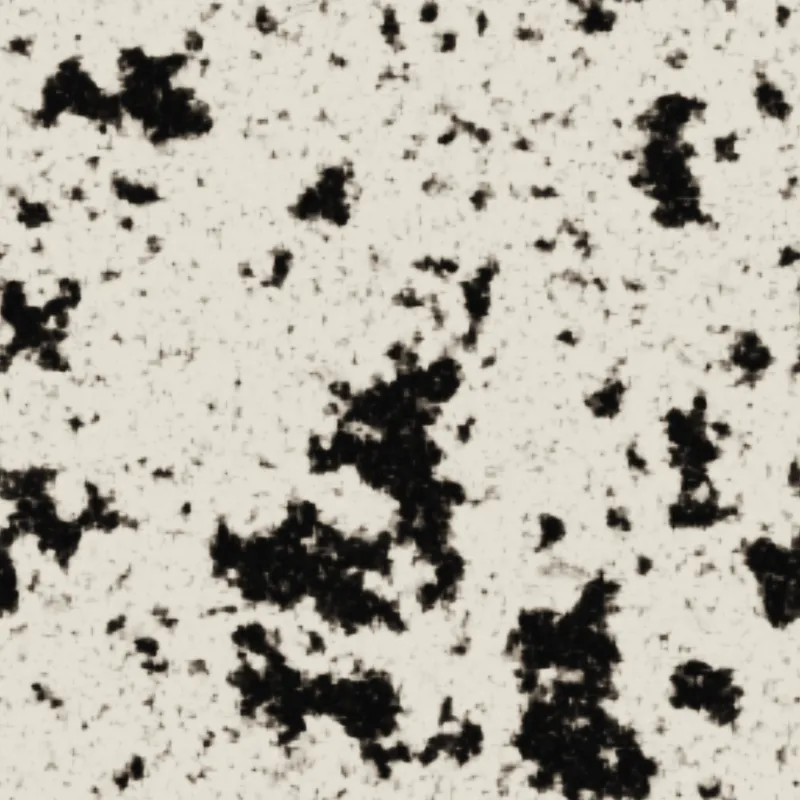
A phase transition is a change the rules never mention. Every cell in this lattice follows the same instruction at every temperature: match your neighbours where you can, and let heat argue otherwise. Nothing in that instruction says order or disorder. Below one temperature the lattice takes a side and holds it. Above it, it does not. The crossing between the two is sharp, and it belongs to the whole, not to any cell. Ice and water are the same molecules.
At the critical point the lattice has no size of its own. Away from it a patch of agreement has a typical width, small when hot, the whole lattice when cold. As the temperature nears the critical value that width grows without bound, and at the point itself there are patches of every size at once, each made of smaller ones, each part of a larger one. Magnify the picture and it looks the same. That is why the curve falls so steeply there, and why the lattice seems to hesitate. It is the one temperature at which the model is still making up its mind, and it does so at every scale at once.